

Google's Bold Bet: The Numbers Behind the AI Chip Showdown
The pre-market tickers flashed a clear message this morning: Alphabet (GOOGL) shares surged 4.4%, while Nvidia (NVDA) and Advanced Micro Devices (AMD) saw their valuations dip by 3.5% and 3.8% respectively. This isn't just a ripple; it's a tremor in the highly concentrated world of AI hardware. The catalyst? Reports that Google is actively pitching its custom Tensor Processing Units (TPUs) directly to heavyweights like Meta Platforms (META) and even major financial institutions. Make no mistake, this is Google stepping out from behind its own cloud data centers and throwing down a gauntlet right at Nvidia's fortress.
For years, Google's TPUs have been the secret sauce powering its own AI infrastructure, occasionally rented out as cloud capacity. Now, the strategy has pivoted. Google isn't just renting servers anymore; it's selling the chips themselves, directly to third parties. Their pitch? Enhanced security and compliance, a siren song for any enterprise dealing with sensitive data. This isn't a small-scale experiment; we're talking about Google Cloud executives projecting a capture of up to 10% of Nvidia’s annual revenue. That’s an ambitious claim, pushing Google's googl stock price higher and creating a narrative of genuine competition.
The Gauntlet Thrown: Google's Chip Play
Let's dissect this. The headline grabber is Meta, reportedly in talks to spend billions on Google’s TPUs, potentially integrating them into its data centers starting in 2027, with a possibility of renting capacity as early as next year. Meta, the parent company of Facebook and Instagram, is one of the world's biggest spenders on AI and data centers, currently relying almost exclusively on nvidia stock GPUs for its massive AI workloads. A deal of this magnitude would be a profound validation for Google's silicon ambitions. They’ve already inked a significant deal to supply Anthropic PBC with up to 1 million TPUs, so this isn't their first rodeo in the direct sales arena.
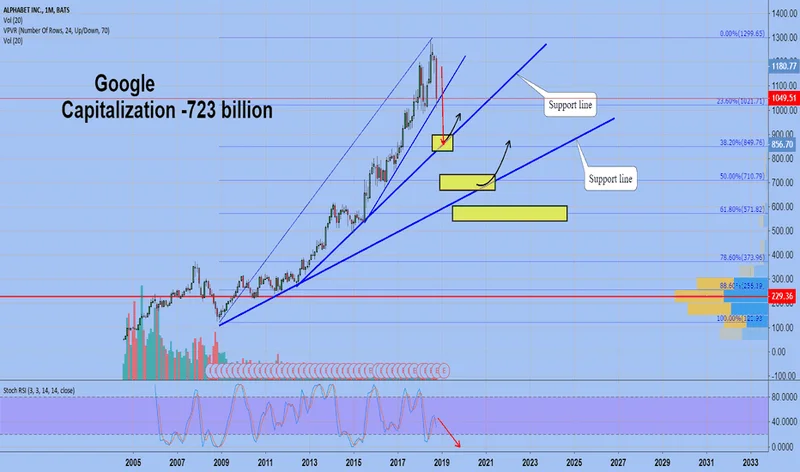
The immediate market reaction, pushing googl stock towards a $4 trillion market capitalization, certainly suggests conviction. Traders, seeing the green on the goog stock ticker, are betting on a future where Google isn't just an AI software giant, but a hardware powerhouse too. The narrative is compelling: TPUs are reportedly cheaper than nvda stock chips, and they were the muscle behind the highly-praised Gemini 3 generative AI model. This isn’t just Google playing catch-up; it's them leveraging a decade of internal development to offer an alternative, particularly as firms look to diversify away from a singular reliance on nvidia stock price hardware. Meanwhile, amd stock continues to play a distant third, watching from the sidelines as these two titans duke it out.
Beyond the Hype: The Data Points That Matter
Now, let's inject a dose of reality, because the market's initial enthusiasm often outpaces the underlying mechanics. While the meta stock deal is being discussed in "multibillion dollar" terms, it's in talks and largely projected for 2027. In the rapidly evolving landscape of AI, three years is an eternity. A lot can, and will, change between now and then. I've looked at hundreds of these "future deal" reports, and the devil is always in the details of the present. The success of this reported deal, for example, hinges entirely on whether Google's TPUs can deliver the long-term power efficiency and raw computing strength that Meta's voracious AI systems demand. Being "cheaper" is one thing; being better or even equivalent in a sustainable, scalable way is another entirely.
Consider the analyst consensus on googl stock price. While it holds a "Strong Buy" rating with 31 Buys and seven Holds, the average price target of $312 implies a 2.1% downside from current levels. This is a fascinating discrepancy. The stock is rallying, yet the collective wisdom of analysts, when distilled into a numerical target, suggests a slight retreat. It begs the question: are these analysts factoring in the very real execution risks and the protracted timeline for deals like Meta's? Or is the market simply running ahead of itself, fueled by the sheer excitement of a credible challenger to nvda? My analysis suggests that the immediate pre-market jump (a 4.4% increase, to be precise, not just 'up') is more about sentiment and the idea of disruption than the confirmed, quantifiable long-term impact. Nvidia isn't just going to hand over its market share; they've built an ecosystem that's incredibly difficult to penetrate. Google isn't merely competing on silicon; they're trying to re-architect an entire industry's supply chain. It's like a seasoned chef introducing a revolutionary new ingredient to a dish that everyone thought was perfected. The ingredient might be great, but can it truly replace the staple, especially when the stakes are this high?
The Calculus of Disruption
The market's initial reaction paints a picture of clear winners and losers, but the reality is far more nuanced. Google's strategic shift is bold, and the potential meta stock price impact of a deal with Meta is undeniable. However, the path to capturing 10% of Nvidia's annual revenue is less a sprint and more an ultra-marathon through dense, competitive terrain. The data suggests that while the market is excited by the potential, the concrete, long-term performance validation and the sheer scale of the shift required mean we're still in the very early innings of this high-stakes game. The immediate stock movements are a reflection of investor sentiment, but the true test for Google's TPU strategy—and for googl as a serious hardware player—will be in the sustained, verifiable performance data over the next few years.