

Filecoin's Future: Decentralized Storage or Digital Dust?
Filecoin (FIL) is currently trading around $1.36. Forecasts are all over the map, predictably. One analysis suggests an average price of $2.65 by 2025; another floats a potential high of $5.82. By 2031, we're supposedly looking at a possible $29.69. Let's unpack this.
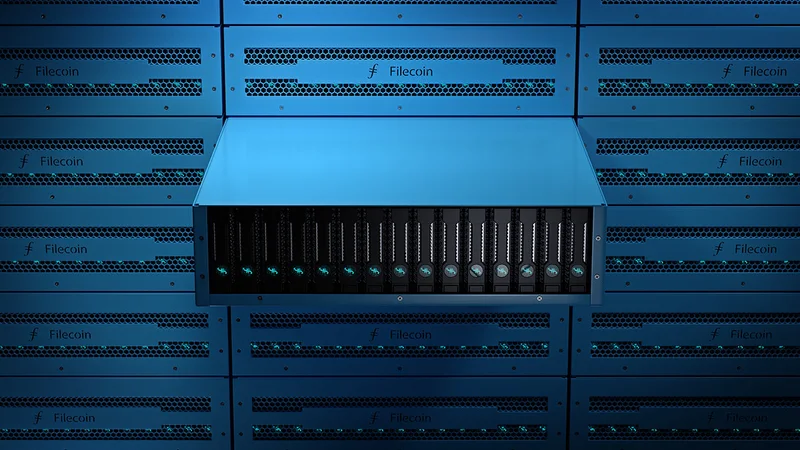
The core promise of Filecoin is decentralized storage. Instead of relying on Amazon, Google, or Microsoft (the usual suspects), users can rent out unused hard drive space and earn FIL tokens. The theoretical appeal is cost reduction and increased security through distribution. It's a Web3 play, aiming to underpin decentralized applications (dApps) needing secure data storage.
The technical analysis paints a less rosy picture, at least in the short term. The 1-day chart shows FIL struggling below its 20-day moving average, signaling bearish momentum. The RSI (Relative Strength Index) is hovering in neutral territory, suggesting neither overbought nor oversold conditions. In plain English: no clear buying pressure. If FIL can't hold support around $1.30, it could slide further towards $1.20. A break above $1.52 is needed to signal any real recovery. This isn’t exactly screaming "buy the dip."
The longer-term projections are where things get interesting, or at least optimistic. By 2028, the price is projected to reach $9.03. By 2031, FIL might hit $29.69. The question is, what's driving this supposed growth? The narrative hinges on increased adoption of decentralized storage, integration with Web3 infrastructure, and enterprise demand for secure data solutions. The Filecoin ecosystem is actively funding projects. RetroPGF Round 3 allocated over 500,000 FIL to projects contributing to the ecosystem between November 2024 and September 2025. But is this enough to fuel sustained growth?
The projections seem to assume a linear progression. More adoption equals higher prices. But the crypto market rarely operates in a straight line. Competition is fierce. Filecoin isn't the only player in the decentralized storage game, and it's up against established giants in the cloud storage arena. The report mentions a potential high of $50+ in the next major bull run. Well, everything goes up in a bull run. The real test is what happens when the tide goes out.
Cracking the Code: Filecoin's Real Value Proposition
Let's dig into the technicals. The daily simple moving averages (SMA) are mostly showing "sell" signals. The 200-day SMA, a key indicator of long-term trends, sits at $2.48. The price would need to more than double just to get back to that level. On the other hand, some exponential moving averages (EMA) suggest a buy signal, but these are shorter-term indicators and less reliable for long-term forecasting. (I generally put more weight on the 200-day SMA myself.)
One key point often overlooked is the sheer amount of FIL in circulation. The circulating supply is around 1.95 billion FIL. To reach $100, the market cap would need to approach $200 billion. That's a tall order, even in a crypto bull market. For context, Bitcoin's market cap is currently around $1.3 trillion.
I've looked at hundreds of these reports, and the reliance on "adoption" as a driver of price is usually a red flag. What kind of adoption? By whom? And at what cost? The recent RetroPGF round is a positive sign, but it's also a reminder that the Filecoin ecosystem is still heavily reliant on its own internal funding mechanisms. It's like a company buying its own stock to prop up the price.
The report notes that Filecoin is not built on Ethereum, but it has integrated with it to enhance functionality. This is a smart move, as it allows developers to leverage both platforms. However, it also introduces complexity and potential vulnerabilities. The system relies on proof-of-replication and proof-of-spacetime consensus mechanisms. These mechanisms are designed to ensure data is reliably stored. But they are also computationally intensive (expensive).
A Fork in the Road: Speculation vs. Reality
So, what's the real takeaway here? The Filecoin price predictions range from cautiously optimistic to wildly unrealistic. The average price target for 2025 is around $2.65 – or, to be more exact, forecasts range from $2.53 to $2.77. That's roughly double the current price. Possible, but far from guaranteed. Filecoin price prediction 2025, 2026, 2027-2031 Reaching $100 seems like a pipe dream, at least in the foreseeable future.
The fundamental challenge for Filecoin, as I see it, is bridging the gap between its technological promise and real-world demand. Decentralized storage is a compelling idea, but it needs to offer a clear advantage over existing solutions in terms of cost, performance, and reliability. Right now, it's not clear that it does. The technical indicators are mixed, the market sentiment is cautious, and the competition is fierce.
Filecoin: Still a Gamble, Not a Sure Thing
Filecoin's future hinges on more than just "adoption." It needs to demonstrate tangible value, attract serious enterprise clients, and build a sustainable ecosystem. Until then, it remains a speculative bet, not a safe investment.