

Crypto Bloodbath: Capitulation or Just a Speed Bump on the Road to Riches?
Bitcoin's wild ride this week, plummeting from $112,000 to under $106,000, triggered a massive $1.27 billion liquidation event. That's a hefty chunk of change vaporized in a matter of hours. The CoinGlass data paints a clear picture: long traders got absolutely hammered, accounting for nearly 90% of the total liquidations. Shorts, on the other hand, only saw about $128 million disappear. Now, that's what I call a discrepancy.
Liquidations, for those unfamiliar, are the automated forced closures of leveraged positions when margin levels can’t keep up with price movements. Crypto exchanges aren't exactly known for their gentle touch. When a trade goes south, they pull the plug, selling the position to cover losses.
The Anatomy of a Crypto Crash
Where did the biggest hit land? HTX, apparently, saw a $33.95 million BTC-USDT long get wiped out. Ouch. Hyperliquid took the lead in overall liquidation activity, registering $374 million in forced closures – a staggering 98% of which were longs. Bybit and Binance followed, with $315 million and $250 million respectively. It's always interesting to see which platforms attract the most leveraged bets – a potential indicator of user risk appetite (or lack thereof).
This all happened after Bitcoin failed to break above $113,000. What's more, thin order books across major exchanges amplified the price swings. Cascading liquidations during low-liquidity hours? That's a recipe for disaster.
These events often serve as "clearing moments," resetting leverage and allowing spot buyers to trickle back in. But are we really cleared for takeoff? Open interest remains near $30 billion, and funding rates have barely budged. Traders are, understandably, wary, especially with the Federal Reserve's looming rate decision.
And it wasn't just Bitcoin. Ethereum and Solana felt the pressure too, with liquidations exceeding $300 million combined. Altcoins, in general, tracked lower as speculative fervor waned. According to BTC, ETH, XRP , SOL News: Traders Lose Over $1B in 24 Hours as Longs Get Crushed, over $1 billion was liquidated across the crypto market in a single day.
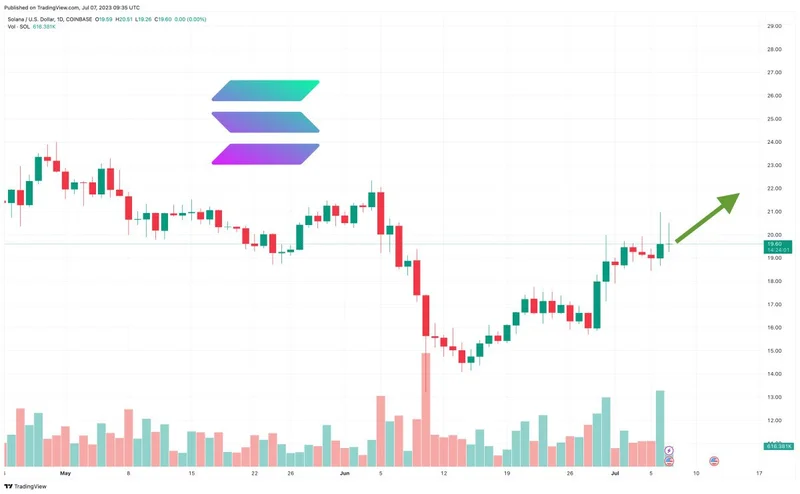
The Solana story is particularly interesting.
Solana's Stumble: A Sign of Things to Come?
Solana, fresh off a strong October, saw its price weaken considerably. It slipped below $176, losing its footing around the $178-$180 level. An 8% drop amid low trading volume? That doesn't exactly inspire confidence.
The broader crypto market capitalization also took a hit as traders cashed in after the recent rally. This pullback officially pushed Solana into a weekly downtrend. The big question now: will it revisit the key demand zone near $165? Analysts like Ali seem to think so, highlighting a possible downward trajectory if that support fails to hold. Ali's chart suggests a potential rebound toward $200 before the downtrend continues, possibly dragging SOL towards the $130–$100 zone by early 2026. I’ve looked at hundreds of these charts, and this projection is pretty standard stuff.
Of course, a lot hinges on Bitcoin. A rebound above $110,000 could give Solana the lift it needs to recover. Until then, it might just consolidate within a narrow range, waiting for a clear signal.
Solana's short-term outlook appears bearish, but its long-term fundamentals are still touted as reasons for optimism. The $165 demand zone is critical. Holding above it could reignite buying pressure and pave the way for a retest of $200. But if market sentiment worsens and Bitcoin remains weak, SOL could face further downside.
The FAQs in that article offer some simple explanations: Solana fell due to weak market sentiment, low volume, and Bitcoin's decline. Recovery is possible if it holds above $165 and Bitcoin climbs past $110,000. Short term bearish, long term...maybe.
So, What's the Real Story?
Look, it's a classic crypto correction. Too much leverage, too much hype, and a swift kick in the teeth when the market gets jittery. The question isn't whether these dips will happen – they will. The question is whether you're positioned to weather the storm. A cool head, a data-driven approach, and a healthy dose of skepticism are your best defenses in this game. And maybe, just maybe, a little less leverage.