

Google's Space-Based AI: Are We Witnessing the Dawn of Limitless Computing?
Okay, folks, buckle up, because Google might just have flipped the script on the future of AI. Forget sprawling data centers sucking up power and land – they're talking about putting AI in space. I know, it sounds like science fiction, but Project Suncatcher is very real, very ambitious, and frankly, it makes my head spin in the best possible way.
The idea is elegantly simple, yet mind-bogglingly complex: constellations of solar-powered satellites, packed with Google's TPUs (those specialized AI chips), all linked by free-space optical beams. Think of it as a giant, orbiting brain, soaking up the sun's energy and crunching data at speeds we can barely imagine.
From Earth-Bound to Sky-High: A Paradigm Shift?
Why space? Well, for starters, there's the energy. Solar panels in orbit can be up to eight times more productive than on Earth. Eight times! Then there's the environmental impact. As Google themselves point out, this approach "minimizes impact on terrestrial resources." Major tech companies are projected to spend $3 trillion on earthbound datacenters, and that's going to put a strain on the planet. Space offers a way out, a chance to scale AI without further stressing our already taxed resources. It's like moving from the crowded city to the wide-open countryside – only the countryside is the vast expanse of space!
Of course, there are challenges. "Significant engineering challenges remain," Google admits, "such as thermal management, high-bandwidth ground communications and on-orbit system reliability." But let's be honest, every truly transformative technology faces hurdles. Remember when people thought heavier-than-air flight was impossible? Or when the idea of a personal computer seemed like a crazy dream? These are just engineering problems, and human ingenuity has a pretty good track record of solving those.
And it's not just Google. Elon Musk is talking about scaling up to create datacenters in space, and Nvidia AI chips are already headed that way. The race to conquer the computational high ground is officially on.
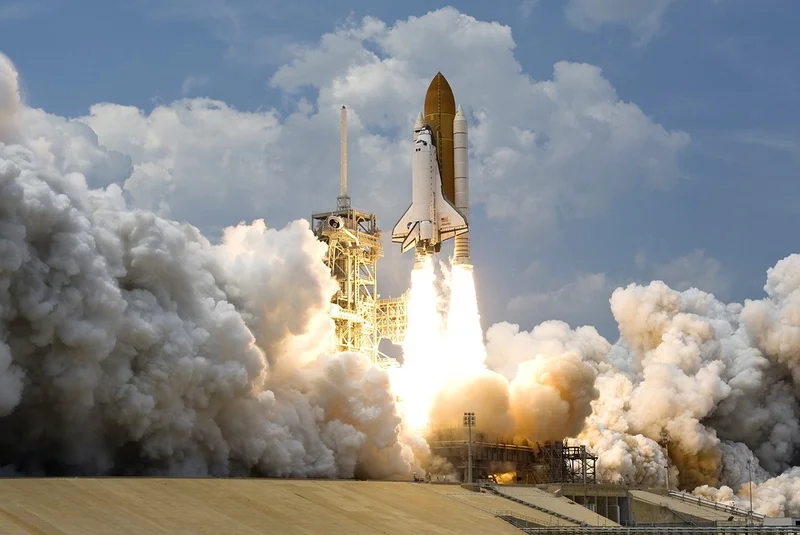
But here's the thing that really excites me. This isn't just about faster computers or more efficient data centers. This is about unlocking the potential of AI. What happens when AI has access to virtually unlimited computing power and energy? What new breakthroughs become possible? What new problems can we solve?
Imagine medical diagnoses that are instantaneous and incredibly accurate, personalized education tailored to each individual student, climate models that can predict and mitigate disasters with unprecedented precision. This isn't just about making our lives easier; it's about fundamentally changing what's possible for humanity.
I saw a comment on a Reddit thread the other day that really stuck with me: "This feels like the start of something truly huge. Like the internet in the early 90s." And I couldn't agree more. We're standing at the edge of a new frontier, a moment where the impossible suddenly seems within reach.
Now, I know what some of you are thinking: "What about the astronomers? What about space junk?" These are valid concerns, and we need to address them responsibly. We need to ensure that our pursuit of progress doesn't come at the expense of our planet or our ability to explore the universe. But I believe that with careful planning and international cooperation, we can navigate these challenges and unlock the incredible potential of space-based AI.
Google is planning to launch two prototype satellites by early 2027, and their research results are a "first milestone towards a scalable space-based AI". You can read more about this initiative in Meet Project Suncatcher, a research moonshot to scale machine learning compute in space.
The Singularity, Sooner Than We Think?
When I first read about Project Suncatcher, I honestly just sat back in my chair, speechless. This isn't just a new project; it's a glimpse into a future where the limitations of computing power are a thing of the past. It's a future where AI can truly reach its full potential, and where humanity can tackle its greatest challenges with a new level of intelligence and creativity. The implications are so vast, so profound, that it's almost overwhelming. Are we ready for this? I don’t know, but one thing is certain: the future is arriving faster than ever, and it's heading straight for the stars.